

- All
- Product Management
- News
- Introduction
- Enterprise outlets
- FAQ
- Enterprise Video
- Enterprise Atlas
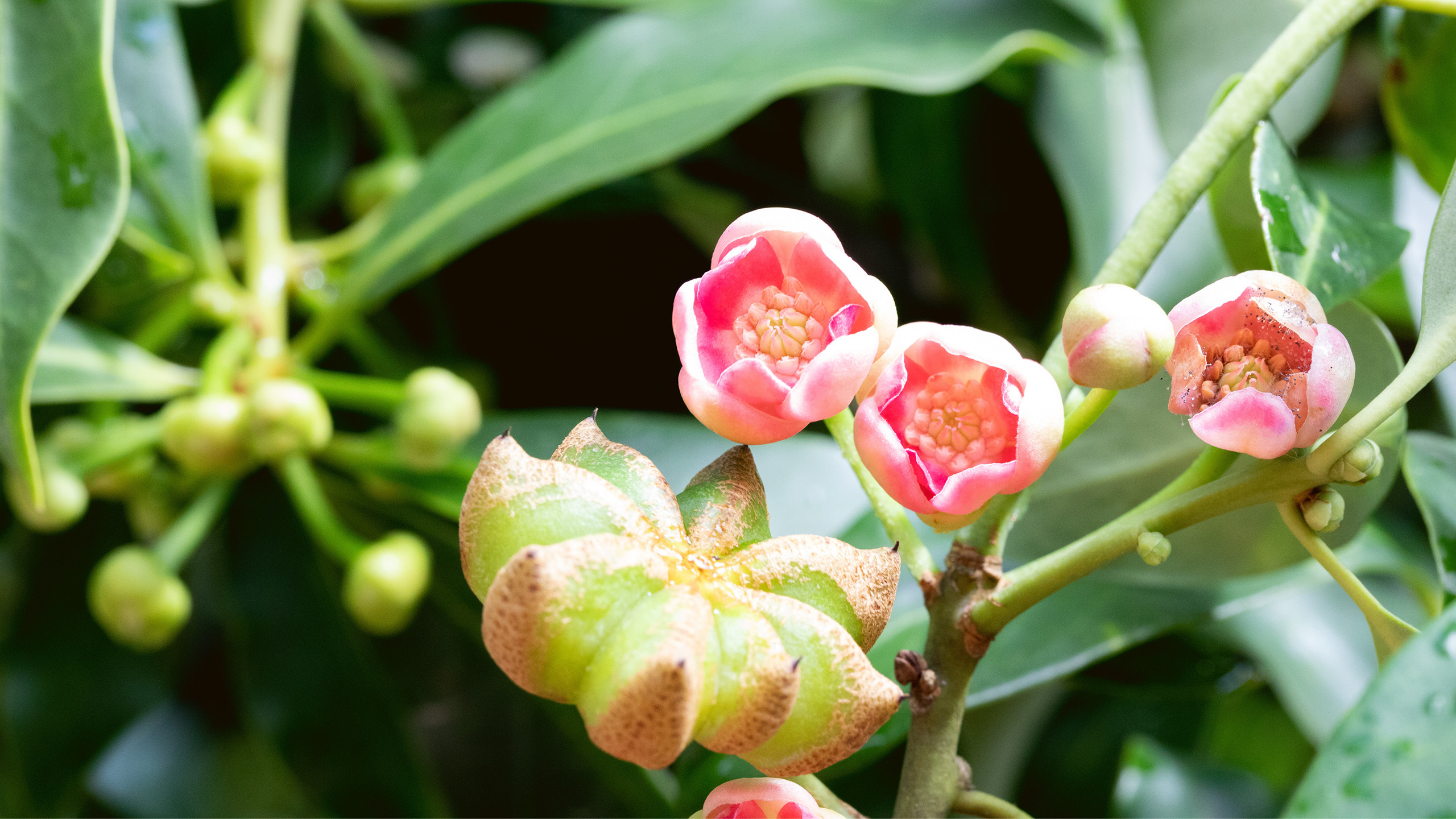
The 'second entrepreneurship' of the hometown of star anise.
Release time:
2024-04-18
In Yunnan's "East Gate" Funing County, a folk song has been sung for generations: "Star anise is a treasure in the mountains, plant it for a hundred years of good. Star anise is a money tree, plant it for a hundred years of wealth." Every word and sentence contains the local people's more than 300-year unbreakable bond with the star anise tree.

PlantingAn area of 708,000 acres,AbsorbIt has driven 55,700 people to employment and an agricultural output value of 1.824 billion yuan... Today, star anise has become the pillar industry in the county with the longest planting time, the largest area, the widest coverage, the highest output value, and the strongest contribution to farmers' income. Entering a new stage, Funing continues to expand the transformation channel from green mountains and clear waters to golden mountains and silver mountains, deeply tapping potential to enhance the star anise "local specialty".

Strengthening technology Low-efficiency forest transformation increases production
Funing's villages have a long tradition of planting star anise, and deep in the mountains of Funing, the hills are covered with star anise trees. Due to the significant fluctuations in the star anise market price, over the years, some villagers have neglected the management of star anise forests, resulting in severe anthracnose disease in most star anise forests. In recent years, Funing has taken low-efficiency forest transformation as a breakthrough, and the star anise industry has embarked on a "second entrepreneurship" path from having to optimizing.
"Thirty years ago, I planted 20 acres of trees, about 12 acres survived, and I could only harvest over 1,000 kilograms of fresh fruit each year, earning about ten thousand yuan," said star anise grower Fu Weizhong from Huajia Township. Since 2021, his family's star anise output value has made a qualitative breakthrough.
"The output of Old Fu's star anise forest increased from 1,000 kilograms in 2021 to 8,500 kilograms in 2022, and then to 18,500 kilograms in 2023, with significant increases in income and output," said Zhao Dezhou, a technical consultant for the local leading star anise enterprise Yunnan Zhongmu Agricultural and Forestry Development Co., Ltd. The company has established a comprehensive technical demonstration base for improving the quality and efficiency of star anise in Huajia Township, radiating and driving the implementation area of quality and efficiency improvement for star anise in the county to over 200,000 acres. "Currently, the popularization rate of star anise science and technology has reached over 90%, achieving an annual income increase of over 100 million yuan for growers," Zhao Dezhou said.
According to a 2023 survey, the area of star anise forests in Funing County that are unmanaged and severely diseased is 175,300 acres, accounting for 24.7% of the total area. These star anise forests are in a state of near total loss due to lack of management or abandonment by the community, with severe pest and disease issues. In response, Funing County has adopted models such as entrusted management, cooperative enterprise joint management, and self-management to promote the transformation of low-yield star anise forests.
In Anlan Village, Xinhua Town, 76 households voluntarily entrusted their 2,070 acres of low-efficiency star anise forest, which were unmanaged or severely diseased, to Xinhua Town Qiangcun Fumin Investment Co., Ltd. for management under the "541" model. The "541" model means that farmers invest their star anise forests as shares, the village collective economic organization is responsible for funding inputs such as fertilizers and labor management, and the enterprise is responsible for technical services and training; profits are distributed as 50% to farmers, 40% to the village collective economic organization, and 10% to the enterprise. This effectively solves the problems of unmanaged, unfunded, and untechnically managed low-efficiency star anise forests, allowing the star anise forests that were basically in a state of total loss to be revitalized.
Extending and supplementing the chain Enhancing organizational level to enter the market
Star anise, also known as anise, is a precious seasoning, industrial raw material, and medicinal material. Its fruits and seeds can be used for medicine, and its branches and leaves can be extracted for star anise oil, which is an important fragrance in perfumes and cosmetics.
After the Spring Festival, Weiji Village in Dongbo Township began harvesting "winter fruits." The village and its surroundings are filled with lush, plump fruits hanging from the branches, and the air is filled with the unique fragrance of star anise. Viewed from above, Weiji resembles a leaf-shaped ark, floating on a rolling green sea.
"The output of the village's 2,200 acres of star anise has been increasing year by year, reaching over 550 tons in 2022, with an output value of over 4 million yuan. Star anise has become the most reliable 'green bank,'" said Xiong Yuefeng, the village group leader. Out of the 173 households in the village, about ten have gone out to work, and most of the young people who previously worked away have returned home to manage their star anise trees.
As the transformation of low-yield star anise forests yields abundant harvests, the enthusiasm of villagers to nurture and comprehensively transform star anise forests is rising. At the same time, how to connect "small farmers" with the "big market" and enhance farmers' risk resistance capabilities has become increasingly urgent. "Last year, the village established a cooperative, allowing large growers to take the lead, improving the standardization of planting, and connecting with leading enterprises and markets outside the province," Xiong Yuefeng said.
In 2023, Funing County introduced a three-year action plan for the high-quality development of the star anise industry, proposing to establish farmers' professional cooperatives, cultivate and strengthen leading star anise enterprises, and establish a "dual-binding" benefit connection mechanism to enhance the organizational level of the star anise industry in the county. Since last year, various towns and villages (communities) in the county have established collective economic companies or cooperatives under the leadership of party branches to strengthen the management and protection of the star anise industry. Currently, a total of 7 collective economic companies and 29 star anise planting and operation cooperatives have been established, with 126,000 acres of cooperative construction bases led by party organizations.
As the main production area of star anise, Funing is accelerating the steps to strengthen leading enterprises, supplement the chain, develop new business formats, and build brands. The first leading enterprise cultivated, Yunnan Zhongmu Agricultural and Forestry Development Co., Ltd., has invested 250 million yuan to implement an integrated project for star anise planting, processing, product testing, product trading, and warehousing logistics, and has established the county's first star anise product quality testing center.
"The modern industrial development system of 'leading enterprises + cooperatives + bases + farmers' is beginning to take shape, and the small, scattered, and weak status of the star anise industry is gradually changing.
Connecting farmers More benefits remain in rural areas for farmers
Since the implementation of the three-year action plan for the star anise industry, Funing County has focused on building a long-term mechanism that is tightly connected, steadily supported, and yields lasting benefits, insisting on combining strengthening driving benefits with enhancing driving capabilities, allowing farmers to share the value-added benefits of the industrial chain.
In response to issues such as the prevalence of low-efficiency nutmeg forests, serious pest and disease problems, low management levels among the public, and low per-acre yields, Funing has established a number of standardized demonstration bases for the transformation of low-efficiency forests in the main nutmeg planting areas of the county. It explores a benefit-sharing mechanism for order-based procurement that connects farmers with enterprises, village collective economic organizations, and cooperatives. Farmers manage and harvest their nutmeg forests according to the technical standards provided by the cooperative; the cooperative is responsible for uniformly providing pesticides and fertilizers, organizing and supervising the public to manage according to unified technical standards, and uniformly purchasing nutmeg while recovering the costs of pesticides and fertilizers; the village collective economic organization is responsible for applying for financial subsidy funds to invest in the cooperative for purchasing pesticides and fertilizers; and the enterprise is responsible for providing technical support and uniformly purchasing fresh nutmeg fruits. This model has established 23 standardized demonstration bases for the transformation of low-efficiency forests across the county, covering an area of 14,990 acres, involving 13 townships, and benefiting 1,258 households.
In addition to the '541' model for improving low-quality forests through 'trusteeship', the '4 five-cent' profit distribution model has also gained attention from various sectors.
In May last year, to address the issues of non-standard use of pesticides and fertilizers and early harvesting affecting the quality of nutmeg, leading enterprises signed order procurement agreements with cooperatives that met the company's management standards and harvesting times. The leading company returned 20 cents per pound to the cooperative based on the actual purchase volume, and the cooperative distributed profits at a ratio of 5 cents to the grower, 5 cents to the cooperative, 5 cents to the village group, and 5 cents to the village committee.
Subsequently, Funing County increased its promotion efforts, encouraging leading enterprises to strengthen cooperation with village collective economic organizations, and village party organizations mobilized nutmeg growers to establish cooperatives and participate. By the end of 2023, leading enterprises had signed procurement cooperation agreements with 19 village collective economic organizations. In 2023, through the '4 five-cent' model, 10,550 tons of fresh nutmeg were purchased, generating a rebate of 4.22 million yuan and promoting an increase in collective economic income of 2.11 million yuan at the village and group levels.
From the transformation of low-efficiency forests to the cultivation of leading enterprises and new cooperatives, and then to the improvement of the mechanism connecting farmers, the future development of the Funing nutmeg industry is promising.


Taobao

Tiktok

Service Number

Public Number
Contact Us
Fixed telephone:0876-6125033
Mobile Phone:18908769999
Company address: Green Agricultural Products Industrial Park, Panlun Township, Funing County, Wenshan Zhuang and Miao Autonomous Prefecture, Yunnan Province
Copyright: Yunnan zhongmu agriculture and forestry development co., ltd. this website has supported ipv4 ipv6 two-way access